UCSB | The Gevirtz Graduate School of Education. Click here to go to the home page.


The Gevirtz School

Graduate School of Education
University of California, Santa Barbara

  • About Gevirtz School
    • Dean Conoley's Message
    • Mission & History
    • Don & Marilyn Gevirtz
    • Faculty
    • Staff
    • Student Association
    • Employment
    • Alumni News
    • GGSE Alumni Assoc
    • News & Press
  • Graduate Studies
    • Dept Counseling,
      Clinical & Sch Psych
    • Dept of Education
    • Teacher Education Prog
    • Joint Doc Ed Leadership
    • Credentials
    • Pre-Professional
    • Student Affairs
    • Financial Support
  • Undergraduate Studies
    • Ed & Applied Psy Minor
    • Cal Teach
    • Minor Science & Math Educ
    • Policies & Procedures
    • Announcements
    • Forms
    • Pre-Professional
    • Student Affairs
  • Prospective Students
    • What Gevirtz Offers - FAQ
    • Credentials
    • Students Services
    • Financial Support
    • Housing
    • Living in Santa Barbara
    • Deadlines
  • Faculty/Research
    • Faculty
    • Koegel Autism Center
    • Asperger Research
    • Hosford Clinic
    • Psych Assessment Center
    • Teaching & Technology
    • Research Centers
    • Research Office
    • Research Highlights
    • Research Interests
  • Donors & Partners
    • Support Gevirtz
    • Support Autism Center
    • Dean's Council
    • Community Relations
    • GGSE Alumni Assoc
    • Our New Building
  • Koegel Home
  • How to Get Help
  • Training Manuals
  • Recent Books
  • Screenings
  • Donations
  • Special Events
  • PRT Certifications, Conferences, & Workshops
    • PRT Certifications
    • PRT Conferences
    • PRT Intensive Workshops
    • PRT Lectures and Presentations
  • Grad Student Research
  • Undergrad Research
  • Recent Publications
  • Rehabilitation R&T Center
  • Journal of Positive Behavior Interventions
  • Our Grants
    • NIH
    • NIMH
    • First S.T.E.P.
    • PDF
    • Previous NIMH
  • Broad Asperger's Center
    • Relevant Research from Major Universities
    • Research in Progress
    • Presentations
  • Directions
  • Contact

Koegel Autism Center

Gevirtz Home/Faculty/Research/Koegel Autism Center

Welcome to

UCSB KOEGEL AUTISM CENTER!


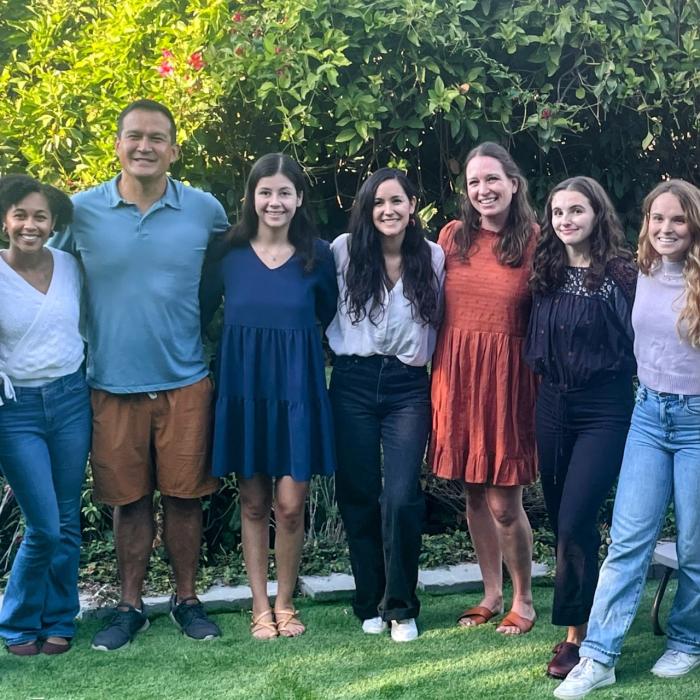
Staff of the Koegel Autism Center
 

Recent News

The UCSB Koegel Autism Center is awarded a grant from the National Insitutes of Health (NIH) to investigate child-initiated interactions and autism intervention.
Read More

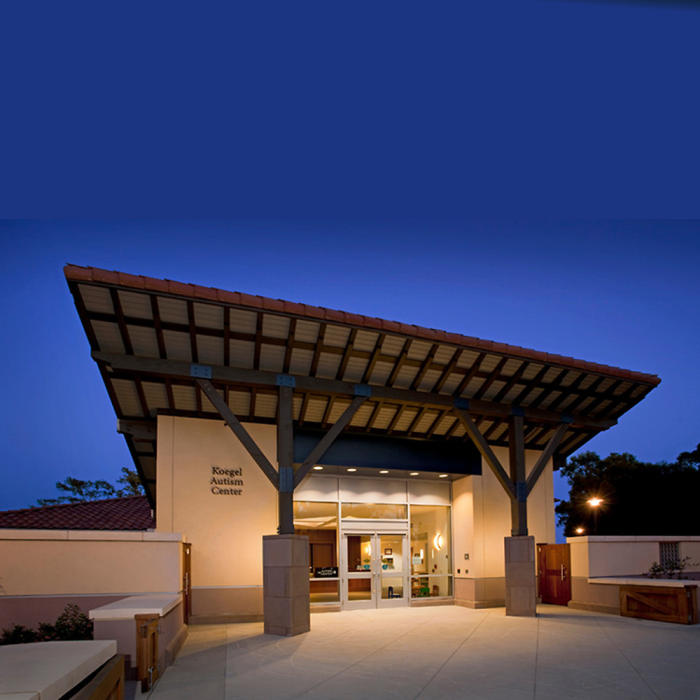
The Koegel Autism Center is now located in our new facility. For a map to our Center, please see Directions Link.
T

The Koegel Autism Research & Training Center is overseen by Drs. Robert and Lynn Koegel. The major goals of the center are increasing our understanding of autism spectrum disorders, the development and implementation of state-of-the-art pivotal response treatments, as well as the improvement of elementary and secondary education efforts for children with autism and other severe disabilities. The center's primary interests lie in research and training (both pre-service and in-service), focusing on family support and on the education of children with autism in community environments and classrooms with their typically developing peers. The center conducts research regarding the development of treatment delivery systems through families, schools, non-disabled peers, and others who provide support for children with autism in educational settings. The center is funded by a number of sources, including the state of California, federal research and training grants from the National Institute of Mental Health, the Department of Education, and through private donations.

The center also provides a number of undergraduate, graduate, and paraprofessional training programs that have the goal of teaching "state-of-the-art" intervention techniques. Research is conducted to assess the effect these programs have on family life, on the improvement of the children's language and behavior, and on the level of increased community and school integration. An additional training component of the center operates through our sponsorship and assistance with national conferences. Our participation in these conferences increases the dissemination of well-researched, readily usable educational procedures, as well as aiding in the unification of professional and family efforts in the improvement of autism.

A third major focus of the research center consists of the development and implementation of non-aversive treatment interventions. These interventions are extremely beneficial for the treatment of severe behavioral problems such as self-injury and aggression. In the past, many painful, extremely aversive procedures were used with individuals with severe disabilities to decrease inappropriate behaviors. The center's multi-site research project has developed a number of non-aversive strategies for promoting generalization and maintenance of treatment gains. These strategies have also been shown to increase desired behaviors while simultaneously decreasing undesirable behaviors. Research projects resulting in significant gains for individuals utilize Pivotal Response Treatments (PRT). These treatment techniques focus on "pivotal behaviors" to allow individuals with autism to reach their full potential. Pivotal Response Treatment (PRT) is a naturalistic intervention model derived from ABA approaches. Rather than target individual behaviors one at a time, PRT targets pivotal areas of a child's development, such as motivation, responsivity to multiple cues, self-management, and social initiations. By targeting these critical areas, PRT results in widespread, collateral improvements in other social, communicative, and behavioral areas that are not specifically targeted.

The underlying motivational strategies of PRT are incorporated throughout intervention as often as possible, which include child choice, task variation, interspersing maintenance and acquisition tasks, rewarding attempts, and the use of direct and natural reinforcers. The child plays a crucial role in determining the activities and objects that will be used in the PRT exchange. Intentful attempts at the target behavior are rewarded with a natural reinforcer (e.g. if a child attempts a verbal request for a stuffed animal, the child received the animal, not a piece of candy or other unrelated reinforcer). Pivotal Response Treatment is use to teach language, decrease disruptive/self-stimulatory behaviors, and increase social, communication, and academic skills.


Empirical Support for Pivotal Response Treatment

SUMMARY CHART


New Developments


Eli and Edythe L. Broad Center for Asperger Research


Pivotal Response Treatment Certification


Click to Enlarge

Our New Building!

GRADUATE STUDENT RESEARCH PROJECTS


UNDERGRADUATE STUDENT RESEARCH PROJECTS


Watch PRT in Practice


UC Center for Research on Special Education, Disabilities, and Developmental Risk (UCSPEDDR)

Copyright © 2005 The Regents of the University of California, All Rights Reserved
The Gevirtz School, UC Santa Barbara, Santa Barbara CA 93106-9490
Last Modified •